Protecting Rural Communities by Reframing the Debate
BACKGROUND
When Congress introduced a $9 billion rescission package that threatened federal funding for public broadcasting, advocacy organizations nationwide mobilized to stop it. With the legislation moving under a rarely used 45-day rescission process, there was only a narrow window to influence the outcome.
Working with the National Association of Broadcast Employees and Technicians (NABET-CWA), Scott Goodstein and Catalyst Campaigns analyzed the broader advocacy landscape before recommending a strategy. While most organizations focused on energizing existing supporters, encouraging Democrats to oppose the bill, and promoting familiar “Save Big Bird” messaging, Catalyst identified a critical gap. Progressive audiences were already highly engaged, but almost no one was speaking directly to the small group of Republican senators whose votes would ultimately determine the bill’s fate.
CATALYST
Rather than duplicating existing efforts, Catalyst Campaigns developed a complementary persuasion campaign focused on conservative voters in Alaska, Maine, and West Virginia, represented by Senators Lisa Murkowski, Susan Collins, and Shelley Moore Capito.
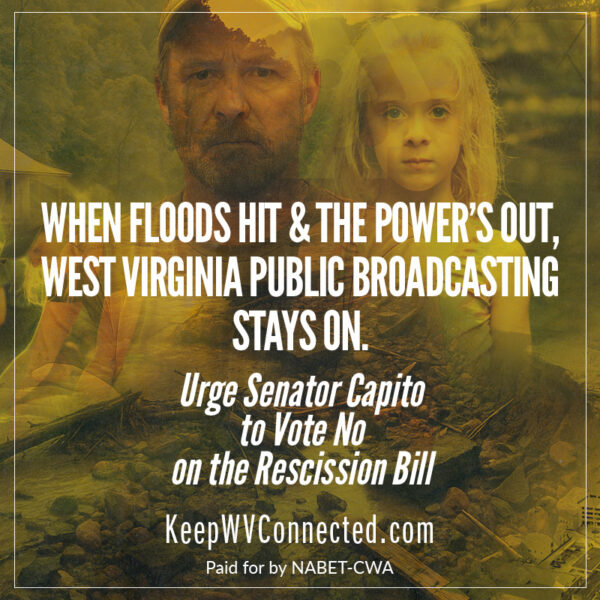
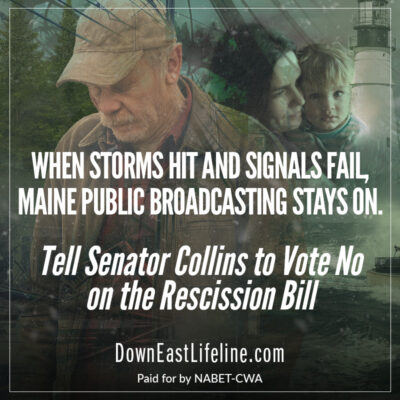
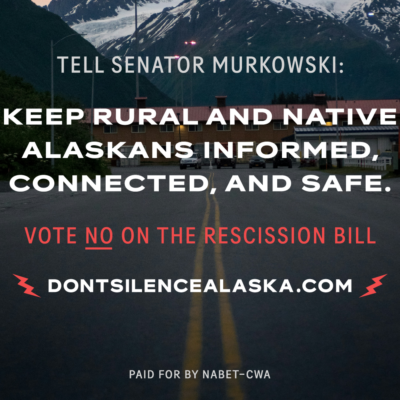
Instead of framing public broadcasting around traditional advocacy themes such as union jobs or educational programming, Catalyst repositioned the issue as essential rural infrastructure. In many remote communities, public broadcasting is the most reliable source of emergency alerts and lifesaving information when severe weather, wildfires, or communications failures leave residents without internet or cellular service.
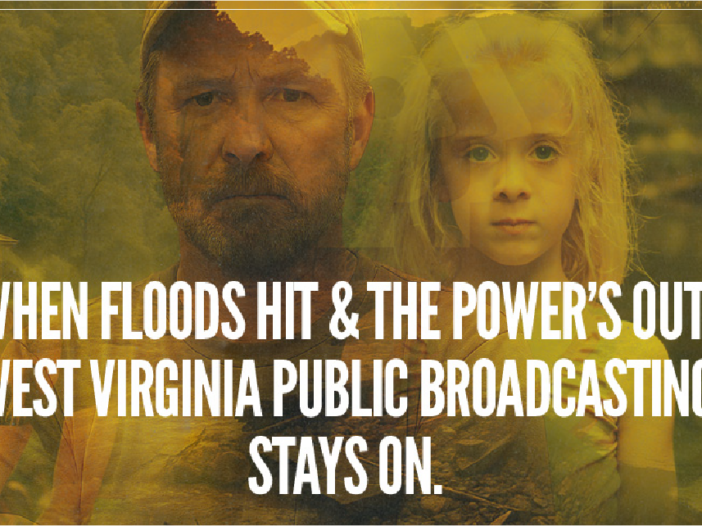
Recognizing that NABET-CWA had limited membership in many of these communities, Catalyst built the campaign around authentic local voices and issues. Creative assets featured everything from local photographs of downed power lines after recent storms in West Virginia to video testimonials from Indigenous leaders in rural Alaska describing how public broadcasting serves as a critical lifeline during emergencies. Because NABET-CWA had little existing organizing infrastructure in these targeted states, Catalyst conducted extensive outreach to trusted local leaders and worked to identify unique community voices whose stories became the centerpiece of the campaign.
Within days, Catalyst Campaigns developed and launched:
- Strategic audience analysis and persuasion planning
- Message development, talking points, and content creation
- Strategic outreach to trusted local leaders and community voices
- Three state-specific advocacy websites featuring localized facts, trusted community voices, and integrated congressional calling tools:
- Professionally produced video, audio, and display advertising
- Sponsored content in influential state political publications
- Earned media strategy and local media outreach
The campaign reached hundreds of thousands of voters in states where the union had little existing organizing infrastructure, dramatically expanding NABET-CWA’s ability to communicate directly with constituents who could influence pivotal Senate votes.
OUTCOME
The campaign sought to persuade Republican members of the Senate Appropriations Committee to oppose advancing the rescission package.
Catalyst Campaigns’ targeted persuasion campaign helped generate constituent pressure that contributed to Senators Susan Collins and Lisa Murkowski publicly opposing the legislation. As a result, Senate leadership relied on a discharge petition to bypass the committee process and bring the rescission package to the Senate floor. It marked the first use of this rarely invoked procedure in more than 50 years. Vice President J.D. Vance ultimately cast the tie-breaking vote to pass President Trump’s rescission package after it advanced without receiving committee approval.
The campaign demonstrated the value of identifying strategic whitespace rather than repeating conventional advocacy tactics. By reaching audiences that other organizations had largely overlooked, Catalyst expanded NABET-CWA’s influence far beyond its existing membership and showed how precision targeting, authentic local storytelling, and rapid digital execution can shape high-stakes legislative battles under extraordinary time constraints. During the final days of the debate, several U.S. senators echoed the campaign’s messaging, local stories, and framing on the Senate floor, reinforcing its influence on the broader public conversation.
For NABET-CWA, the project demonstrated that investing in strategic audience analysis, localized communications, and professional advocacy infrastructure can dramatically extend an organization’s reach beyond its traditional base. Rather than following the conventional advocacy playbook, Catalyst Campaigns identified the missing strategy, reached the audience others had overlooked, and delivered a campaign that amplified the union’s voice where it mattered most.
BY THE NUMBERS
Campaign Performance
- 3 battleground states targeted
- 9.49 million digital impressions delivered
- 1.46 million completed video and audio views
- 1.31 million unique people reached across targeted states
- 6,113 website clicks generated
Geographic Reach
- Maine: 624,962 people reached | 3.96 million impressions
- West Virginia: 354,059 people reached | 1.97 million impressions
- Alaska: 327,435 people reached | 2.11 million impressions
Campaign Infrastructure
- 3 state-specific advocacy websites built to influence constituents of three key U.S. senators
- Dozens of customized digital ads, videos, audio spots, sponsored articles, and creative assets developed and deployed
- Strategic partnerships with trusted local media outlets, including West Virginia MetroNews, Bangor Daily News, Maine Trust for Local News, Alaska Landmine, and POLITICO
SERVICES PROVIDED
Strategic Communications • Campaign Strategy • Audience Research & Segmentation • Messaging & Narrative Development • Brand Positioning • Persuasion Campaigns • Digital Advertising • Website Development • Creative Direction • Video Production • Earned Media • Local Media Outreach • Community Engagement • Coalition Building • Rapid Response Campaigns • Public Affairs • Grassroots Mobilization